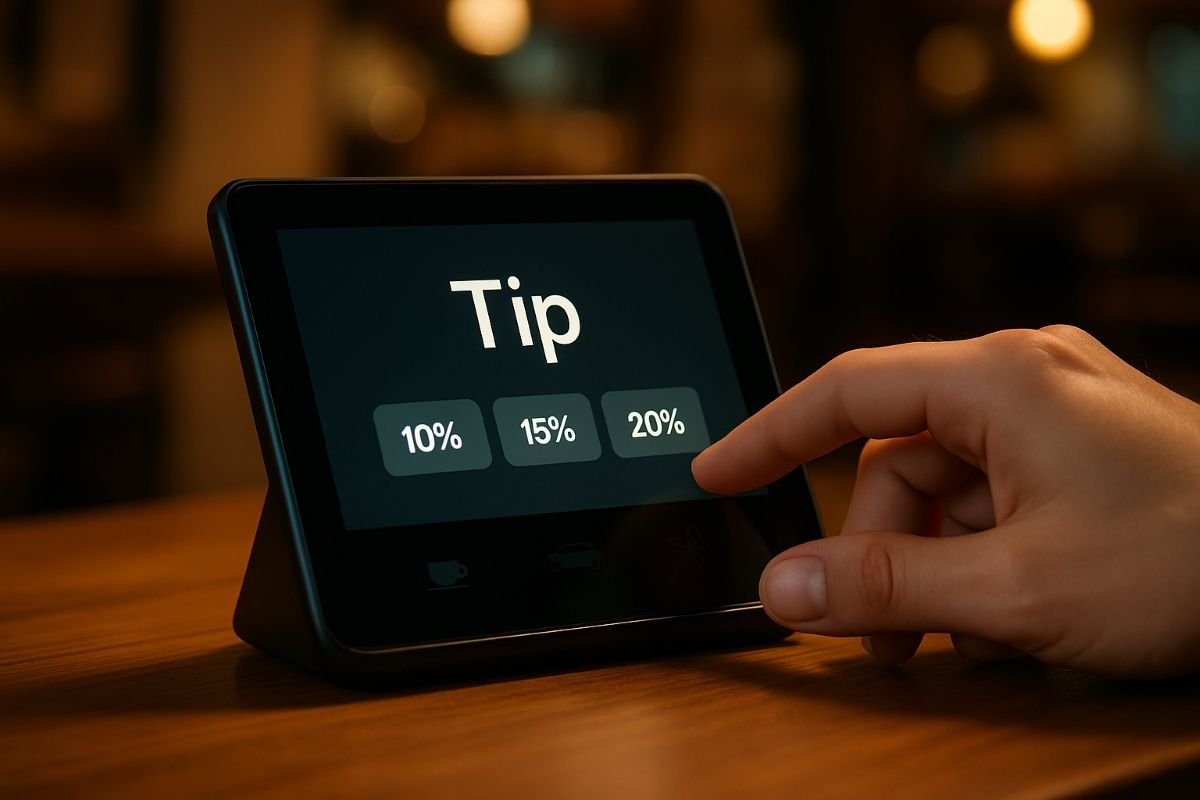
Overview of an Expanding Tipping Culture
Tipping once felt like a compact between guest and server, a ritual bounded by tablecloths and menus. Today it appears beside espresso machines, on ride-share receipts, at hair salons, and on tablet screens that swivel with a practiced arc. A custom rooted in hospitality has spilled into many corners of daily spending.
This spread has been gradual yet unmistakable. Coffee counters now present percentage prompts even for a drip pour. Boutiques ask for gratuities after a cashier scans a candle. Donation jars have become digital, their charm replaced with preset buttons and suggested rates that climb faster than memory recalls.
Familiar rules bring comfort; new settings stir doubt. Is a tip expected here? How much is enough? The questions echo with each transaction, and the answers vary by region, by business model, and by the social stage created at the checkout.
Etiquette adapts because the stage keeps changing.
The New Power of the Checkout Screen and Social Pressure
The swivel tablet is a small theater. A customer stands where the audience once waited, suddenly cast as the lead as bright buttons appear: 18%, 20%, 25%, custom, no tip. Eyes hover at the shoulder. A line forms. Choices are made quickly, and the performance leaves a trace on the receipt.
Choice design matters. Large, colorful percentages feel like default paths. Smaller “custom” options require extra taps and time. “No tip” can be tucked into a corner or behind a second screen, which subtly signals that declining is unusual. Even the gentle chime that confirms payment ends the scene with a bow.
Social cues surround the screen. A barista watches. Friends observe. Strangers wait. These bodies add gravity to the moment, nudging decisions toward generosity or conformity. People often describe a sense of being evaluated. Tip prompts have amplified that sensation, transforming checkout into a soft-pressure point where etiquette and design meet.
Privacy can reduce the heat. So can delayed prompts that arrive by text after delivery. Yet the sway of the screen remains strong, and habits form around its glow.
Standards at Full Service Restaurants
Sit-down meals still anchor the culture of tipping. Servers juggle orders, refills, pacing, and special requests, and gratuities reflect that labor in a very direct way. In many places across the United States, 15% once stood as a common baseline for adequate service. Over time, higher percentages have become everyday practice, especially in major cities, with 18% or 20% seen as ordinary for attentive, problem-free meals.
Large parties are often met with automatic service charges. These fees aim to safeguard pay for staff handling big tables, though the handling of that money—shared among servers, bussers, and kitchen teams—varies widely by restaurant. Some menus state distribution clearly; others leave it opaque. Guests often still add a little extra when service has been thoughtful or if a particular staffer made the evening special.
Pre-tax or post-tax? Customs differ. Many diners tip on the pre-tax subtotal; others tip on the final tally. Transparency helps, and a short line on the check can reduce confusion.
Consistency keeps dining rooms calm.
Bars and Bar Service Norms
Bars operate on a different tempo. A quick beer poured at a crowded counter, a complex cocktail shaken with care, a round split among friends—each scenario shapes expectations. A single dollar per drink has long held as a simple rule, but rising prices and more intricate recipes have nudged that figure up. Percentage-based tipping also appears on tabs, especially when patrons keep an open ticket.
At tableside service in cocktail lounges, standards mirror full service dining. At a packed dive bar, speed and volume factor in. Regulars often build rapport with bartenders by tipping steadily through the night, not just at last call. The ritual feels social and personal.
Short pours and misfires happen. Corrections often come with a nod and, sometimes, a small add-on tip to recognize extra effort.
Tipping Beyond Restaurants
Gratuities have stepped into places once thought tip-free, and each setting carries its own rhythm and expectations.
Coffee Shops and Counter Service
Counter workers greet during the morning rush, steam milk, and memorize names. Some shops place tip screens for every transaction; others display a jar or waive tipping entirely. Patrons might leave a dollar for a simple order, or a percentage for a lengthy, crafted drink. Busy cafés that encourage staying and working sometimes see larger tips as patrons occupy seats for longer.
Self-serve counters with minimal interaction often see smaller amounts. Clarity from staff helps. Small signs that explain how tips are shared—front of house, kitchen, dish—can shift how customers respond.
Delivery Drivers and Taxis
Gratuities play a visible role for drivers. Routes, parking hurdles, and stairs add time and energy to each drop-off. People often set a percentage within an app, then add extra for challenging conditions like heavy rain or late-night runs. Tips given in cash can feel more direct, especially if app settings appear to route money in complicated ways.
Taxis and ride-hail trips bring their own habits. A modest percentage or a round number keeps things simple. Distance, luggage help, and unexpected stops influence the final figure.
Weather matters. So do elevators that never come.
Personal Care Services
Haircuts, coloring, shaves, facials, and massage rely on both skill and trust. Clients often tip a percentage of the service price, with amounts rising for technically demanding work or extra time. Assistants who shampoo or blow-dry may receive separate envelopes at salons that maintain that practice. Clear checkout notes prevent confusion.
Mobile practitioners—nail technicians, braiders, massage therapists—may accept electronic tips through payment links. Many clients round up or mirror salon norms in these settings, acknowledging travel and setup.
Care is personal. Gratitude tends to be, too.
Why Tipping Feels Everywhere Now
Two undercurrents fuel the sense of ubiquity: how service workers are paid, and how new retail formats split labor.
Subminimum Wages and Reliance on Gratuities
In several regions, tipped workers can be paid a lower base wage, with gratuities expected to lift earnings to or above the standard minimum. That structure places customers inside the pay equation. On slow days, take-home pay can sag unless tips stay steady. On busy nights, the opposite may occur.
Advocates for a single fair wage argue that base pay should not hinge on the generosity of strangers. Others claim tipping allows high performers to earn more and preserves a service culture built on attentiveness. The result is a patchwork of rules and expectations across cities and states.
Patchworks breed confusion.
Business Models in Fast Casual and Retail
Fast casual counters blur lines. Guests order at a kiosk, employees run food to tables, and a busser sweeps through after departure. With that extra touch, businesses place a tip prompt, positioning their model between full service and pure self-service. Retail checkouts sometimes add prompts to support staff who help gift wrap, personalize items, or handle custom fittings.
These setups push labor into small acts scattered along a customer’s visit. A tablet captures the moment and asks for a tip, even if the interaction felt brief. The request can feel out of sync with effort perceived. That mismatch feeds debate.
Public Sentiment and the Rise of Tip Fatigue
Many people feel worn down by constant requests. The sensation has a name now: tip fatigue. Walking through a single day can mean tipping for a bagel, a rideshare, a salad, a haircut, and a package drop-off. Each screen asks again. Each moment seeks judgment.
Fatigue shows up in smaller percentages, more frequent declines, and sharper conversations online. Some push back at high default suggestions. Others recoil at prompts that appear before any service is rendered. A few celebrate businesses that remove tip lines entirely and raise prices to cover wages.
Expectation meets budget. Budget often wins.
Global Practices That Shape Expectations
Travelers carry habits across borders, and those habits sometimes clash with local norms. In many parts of East Asia, tipping is uncommon or even refused, with service framed as part of the listed price. In parts of Europe, service charges may be included, with a small round-up left for standout moments. In Canada and the United States, higher percentages are routine and often built into pay structures.
These differences matter inside multicultural cities where visitors and new residents shop and dine. Signage that explains service charges and tip usage can smooth interactions. Training staff to handle questions cheerfully prevents awkward standoffs at the counter or table.
Clarity travels well.
The Debate over Who Should Pay for Service
At the heart of modern tipping sits a simple question: who funds service work? Employers who raise wages and include service charges shift responsibility toward the business and away from variable customer choices. Customers who prefer tipping argue that their money sends quick, targeted feedback that rewards effort in the moment.
Fees complicate the picture. Some service charges act like tips and go to staff. Others are retained by the business to cover benefits, credit card fees, or back-of-house pay. Plain language on menus and receipts reduces suspicion and aligns expectations before the bill arrives.
Silence breeds doubt. Explanation invites trust.
Practical Ways to Navigate Modern Tipping
Start by matching norms to setting. For seated dining and lounge-style bar service, many people choose around 18% to 20%, adjusting for attentiveness, special care, or issues addressed gracefully. At counter service, a dollar or two for small items, or a modest percentage for complex orders, feels common.
Consider the human effort behind the moment. Delivery up stairs, heavy bags, or brutal weather often call for a bit more. For personal care, align with local salon or spa customs, and ask discreetly if assistants are tipped separately.
If a business adds a service charge, look for an explanation. When in doubt, ask how it’s distributed. If budgets run tight, use the custom tip field rather than decline under pressure; small amounts still acknowledge service without overshooting comfort.
Short and sincere thanks go a long way.
What the Future of Tipping Might Look Like
Checkout technology will keep shaping etiquette. More screens mean more prompts, but smarter design may help—clearer labeling, opt-in suggestions, and privacy at the moment of choice. Some cities will experiment with higher base wages and no-tip models, while others continue with blended approaches that include service fees and suggested percentages.
Cultural pushback could reset baselines. If fatigue grows, default suggestions may drop, and businesses may fold more costs into posted prices. On the other hand, communities that prize personalization might keep tipping robust, using it as a signal of appreciation that moves instantly from guest to worker.
Tipping has always been a mirror. It reflects values, budgets, and the stage on which money and manners meet.
That stage keeps changing.