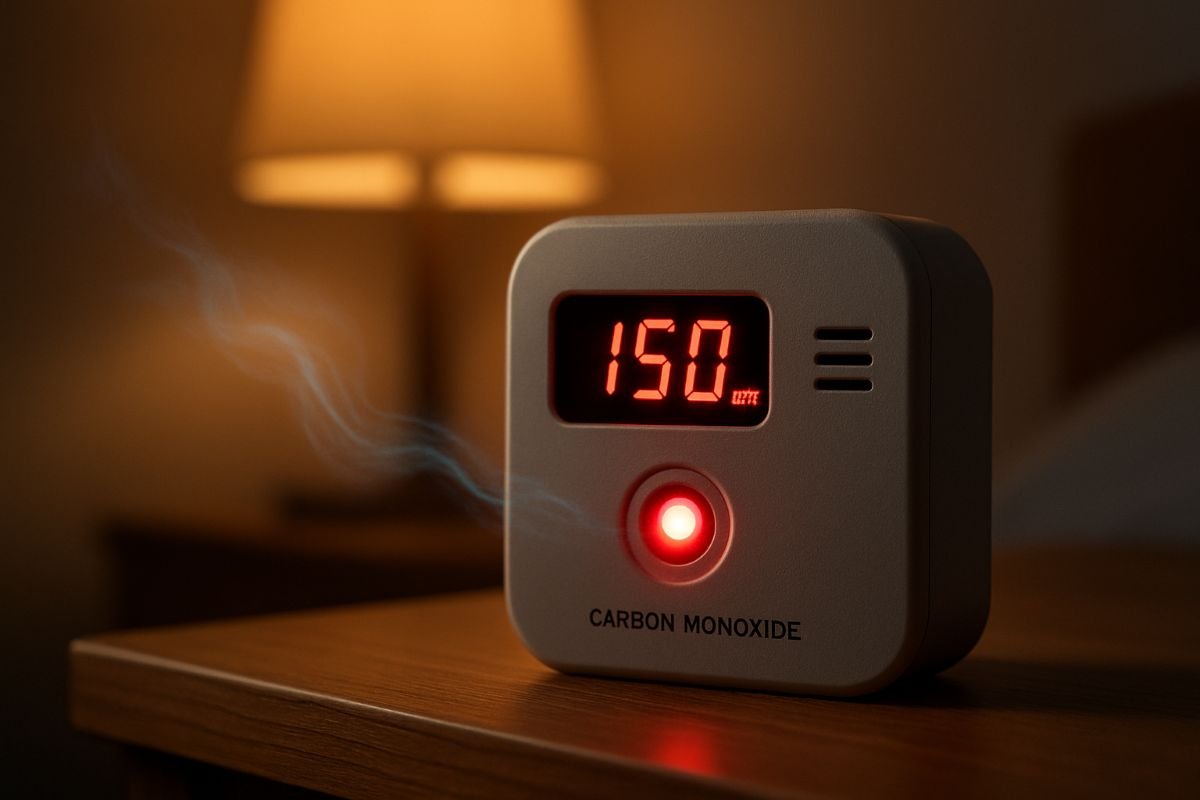
Carbon monoxide (CO) incidents make headlines after mass exposures in hotels, boats, and rental homes. The common thread is often the same: a fuel-burning appliance fails, and people are asleep or unaware. A small detector changes that by sounding an alarm before symptoms escalate.
CO is invisible. A detector gives it a voice.
The Travel Risk of Carbon Monoxide
What Makes CO Dangerous
Carbon monoxide is a colorless, odorless gas produced by incomplete combustion of fuels such as natural gas, propane, gasoline, diesel, wood, and charcoal. It binds to hemoglobin with an affinity far greater than oxygen, forming carboxyhemoglobin (COHb). That reduces oxygen delivery to tissues, including the brain and heart.
Symptoms often mimic viral illness or altitude sickness: headache, dizziness, nausea, confusion, and fatigue. As levels rise or exposure continues, fainting, chest pain, seizures, and death can occur. The risk escalates during sleep, when warning signs go unnoticed.
Some people are more vulnerable. Pregnant travelers, children, older adults, and those with heart or lung disease may experience harmful effects sooner. Pets can be early indicators too; if they appear lethargic or vomit, treat it as a serious warning.
Where Exposures Happen on Trips
Travel adds unique scenarios: unfamiliar appliances, variable maintenance standards, and shared ventilation. Common sources include:
– Faulty furnaces, boilers, or water heaters in hotels and rentals.
– Gas fireplaces and space heaters without proper venting.
– Generators running near rooms or tents.
– Attached garages where idling cars or shuttles linger.
– Boat engines with exhaust pooling near swim platforms or cabins.
– RV appliances, especially if exhaust vents are blocked by snow or debris.
Cold weather increases risk because heaters run longer and windows stay closed. So does storm season, when generators are widely used. Even warm climates see incidents from pool heater rooms or decorative burners.
How Portable CO Detectors Work and Perform
Sensor Technology Basics
Most portable CO detectors use electrochemical sensors. Inside, a chemical reaction at an electrode creates a small current proportional to the CO concentration. This approach is favored for accuracy, low power use, and minimal cross-sensitivity.
Metal-oxide semiconductor (MOS) sensors appear in some compact devices. They tend to consume more power and can be more sensitive to other gases like hydrogen or alcohol vapors. For travel safety, electrochemical sensors are generally preferred.
Sensors do not last forever. The active elements slowly degrade, typically over five to seven years. Quality devices display an end-of-life message or lock out when the sensor can no longer meet performance requirements.
Accuracy Standards and Alarm Thresholds
Consumer CO alarms are designed to balance safety with practicality. They should avoid nuisance alarms at low levels while still warning before health effects become severe.
Two widely cited standards guide performance:
– UL 2034 (North America): Specifies response times and requires no alarm at very low levels. Typical alarm behavior is:
– 70 ppm within 60–240 minutes
– 150 ppm within 10–50 minutes
– 400 ppm within 4–15 minutes
– EN 50291 (Europe): Similar intent with differences in test conditions and thresholds.
Portable instruments aimed at industrial or professional use might display real-time ppm values from 0 upward and allow lower alarm settings. For travel, a consumer alarm certified to UL 2034 or EN 50291 is a practical baseline. If you prefer more sensitivity and data visibility, choose a unit that shows ppm readings and peak values.
Choosing the Right Form Factor
Compact Battery Units
These are small, stand-alone devices powered by AA/AAA or sealed lithium cells. They fit in a toiletry bag and are easy to set up anywhere. Many display current ppm, battery status, and peak memory. Good ones are loud enough to wake a deep sleeper.
They work well for hotel rooms, rentals, cabins, and tents where outlets are unavailable. The tradeoff is occasional battery replacement and, on some models, smaller speakers or displays. Aim for models with electrochemical sensors and a stated sensor life.
Plug In with Backup
Plug-in CO alarms use mains power and switch to battery during outages. They’re convenient in hotels and apartments with accessible outlets. Backup power keeps protection active during storms or if a breaker trips.
Placement matters. Avoid outlets hidden behind heavy furniture or near bathrooms. If the outlet is far from the bed, ensure the alarm is still loud enough at pillow height. Some models include a cord so you can place the sensor at a better height and avoid curtains or vents.
Wearable and Connected Devices
Clip-on or wearable units suit travelers who change locations frequently or work around engines. They can run for months on a coin cell or rechargeable battery. Connected models add Bluetooth or Wi‑Fi for phone alerts and data logs.
Connectivity helps when you’re hard of hearing or away from the room. It also provides documentation if you need to discuss an incident with property managers. Consider privacy, app reliability, and battery impact before relying on cloud features while abroad.
Essential Features for Travelers
Size, Durability and Battery Life
Travel gear needs to handle bumps, temperature swings, and crowding inside a bag. A compact, rugged housing with a protective grill over the sensor helps. Look for ingress protection ratings or at least a sturdy case.
Battery life should cover your longest trip with margin. For alkaline-powered units, carry spares. For rechargeable models, check runtime and bring a cable. Cold weather shortens battery performance, so keep the device near room temperature when possible.
Loud Alarms Displays and Peak Memory
Audibility matters most. Aim for 85 dB or higher at one meter, with a distinctive temporal pattern. A bright LED indicator or strobe helps in noisy environments or for those with hearing loss.
A digital display adds clarity: you see current ppm, status icons, and error messages. Peak memory stores the highest reading since the last reset. That information is useful during discussions with staff or first responders.
Test buttons are important. So are clear error codes for low battery, sensor fault, or end-of-life.
Using Your Detector Away from Home
Hotels and Vacation Rentals
Place the detector near the bed at breathing height, not tucked behind drapes. CO mixes well with indoor air, so extreme placement highs or lows are less important than avoiding dead zones and drafts. Keep it a few feet from fuel-burning appliances to prevent local spikes from cooking fumes.
If the property already has alarms, do not skip your own. You don’t know their age or maintenance history. A personal unit adds redundancy.
RVs, Boats and Cabins
RVs combine living space with multiple fuel appliances. Confirm that vents are clear and that generators exhaust away from windows. Park with the wind carrying fumes away from you and neighbors.
On boats, CO can collect near the stern and in enclosed cabins, even while idling. Avoid running engines or generators while swimming near the platform. Use the detector in sleeping quarters and near the galley.
Cabins with wood stoves or gas heaters need added attention during startup and on windy days that can cause backdrafts. Keep flues open and the detector in a central sleeping area.
Tents Heaters and Winter Trips
Never burn charcoal indoors. Never run a generator near a tent or window. Only use heaters specifically rated for enclosed spaces, and follow ventilation instructions precisely.
Cold nights tempt shortcuts. Resist them. A portable CO detector provides early warning if a tent-safe heater malfunctions or a vent becomes blocked with snow.
Packing and Travel Logistics
Airline and Security Checkpoints
CO detectors are allowed in carry-on and checked luggage. If your model uses AA/AAA alkaline batteries, packing is straightforward. If it contains a rechargeable lithium battery, carry it in your hand luggage in line with airline rules.
Keep the device accessible in case security asks to inspect it. Having the manual or a photo of the product page on your phone speeds the conversation.
Protecting and Storing the Device
Use a small hard case or padded pouch. Protect the sensor inlet from crushing or debris. Avoid storing it with strong solvents or fragrances, which may affect some sensors or cause nuisance alerts.
If the unit has a power switch, turn it off during flights to save battery. If it’s always-on, let it run in the case. After landing, give it a few minutes to stabilize before relying on readings.
Preventing Damage and False Alarms
Avoid extreme temperatures, especially a hot car in summer or freezing overnight conditions. Rapid temperature swings can cause condensation inside the sensor.
Keep it away from alcohol fumes, aerosol sprays, or fresh paint. These can trigger certain sensor types. If you suspect contamination, move the device to fresh air and allow it to recover.
Test weekly during long trips. A quick button press confirms the alarm still sounds.
Responding to an Alarm
Recognize Symptoms and Act Fast
If your alarm sounds and anyone has headache, dizziness, nausea, confusion, or shortness of breath, treat it as a true emergency. Do not try to diagnose the source first.
Time is critical. Seconds matter.
Evacuate, Ventilate and Call for Help
Move everyone to fresh air immediately. Open doors and windows on the way out if it’s safe to do so. Turn off potential sources, like heaters or fireplaces, without lingering.
Call local emergency services. In a hotel or rental, notify management from a safe location. Do not re-enter until responders declare the area safe. If you’re on a boat or in an RV, stop engines and generators and relocate upwind.
Document the Incident and Follow Up
Note the highest ppm reading and the alarm time. Take photos of the detector display and any relevant appliances or generator setups. This documentation helps authorities and property owners address the hazard for the next guests.
Seek medical evaluation if symptoms occurred, especially for children, pregnant travelers, or anyone who lost consciousness. A blood test or CO-oximetry can assess COHb levels. Keep your detector afterward; many models store peak data that may assist in reporting.
Small device. Big difference. Carrying a portable CO detector turns an invisible hazard into clear, actionable information wherever you sleep.