
Introduction: Why Travelers Are Concerned
Headlines thicken like summer heat. Alerts flicker on phones. Routes that felt familiar now carry a question mark.
Tension involving Iran, Israel, and the United States has shifted from distant news to booking screens and route maps. Travelers weigh airports, overflight paths, and insurance lines they once skimmed past. The world is still open, yet choices feel tighter, more deliberate. It’s a season of fine print and smart detours.
How Regional Tension Differs from Global Shutdowns
The last global stoppage taught everyone how it feels when borders slam shut in unison. This moment is different. Flights still move, museums still open their doors, beach chairs still line the shore. The disruption is concentrated, not universal, which means demand sways, it doesn’t vanish.
Patterns bend around hotspots. Some hubs go quiet; others hum louder. Travelers follow the safer paths like water finds a new channel.
The Core Decision for Safer Trips Right Now
The question is plain: Where can you go, and how can you get there, while trimming avoidable risk? The answer lives in three choices—destination, routing, and protection. Each is a dial you can turn. Turn all three, and the trip steadies.
How Regional Conflict Reshapes Travel Demand
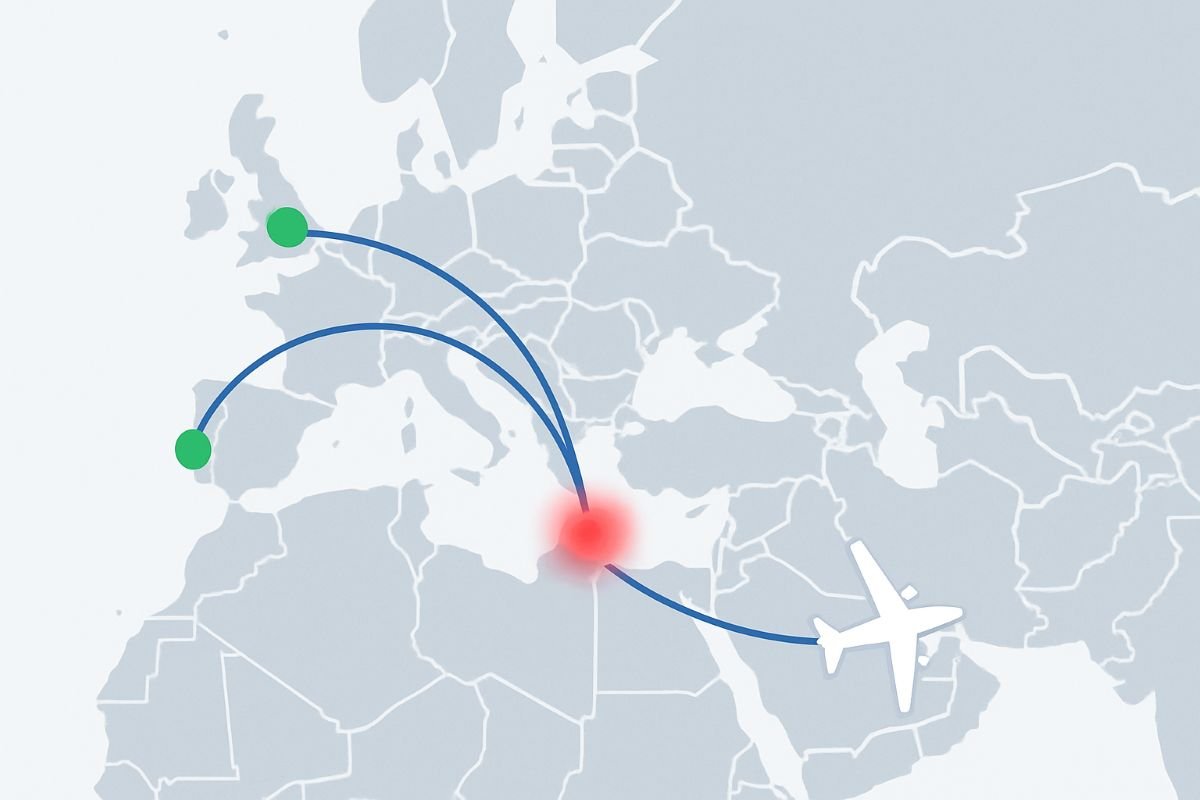
Travelers are practical. They read advisories, study maps, and pick routes that let them sleep at night. The market responds in a similar way: demand leaves some places, gathers in others, and redraws the network’s bright lines in real time.
Avoidance of Conflict Zones and Adjacent Regions
Proximity carries weight. Areas near active tension see bookings thin, even when daily life continues for residents. Border regions lose appeal because risk can ripple outward—overflights may be rerouted, embassies may issue updated guidance, and insurance may narrow coverage. A traveler’s instinct says, not now.
Shift Toward Stable Countries and Safer Air Corridors
Where caution rises, calm elsewhere gains value. Destinations with steady governance, clear advisories, and reliable medical systems earn a second look. The skies show it first: airlines favor corridors that skirt sensitive airspace, sometimes adding minutes to a flight in exchange for a clearer margin. Travelers accept the longer arc for the quieter mind.
Growth in Regional and Short Haul Travel
Shorter hops bloom. Weekend trains fill. Direct flights within the same region, or to neighboring countries with strong infrastructure, become the quick fix for a postponed long-haul plan. A two-hour flight feels easier to pivot than a twelve-hour odyssey.
Sometimes, near is better.
Destinations Facing Reduced Demand
Israel
Israel’s historic sites and coastal cities usually draw steady crowds. During heightened tension, many international visitors set plans aside. Museums still operate, families still gather for dinner, but travelers reading headlines choose to wait for calmer days before strolling the Old City or floating in the Dead Sea.
Jordan
Jordan’s treasures—Petra’s rose cliffs, Wadi Rum’s endless skies—sit near the storm’s edge. Even with continued hospitality on the ground, proximity shapes perception. Some visitors postpone, unwilling to weigh changing advisories against a long-anticipated hike through the Siq.
Lebanon
Cafés and galleries in Beirut have weathered many seasons, yet current conditions prompt caution for those arriving from abroad. The day-to-day fabric continues for residents, but international demand softens when uncertainty grows.
United Arab Emirates as a Transit Hub
Airports in Dubai and Abu Dhabi often serve as stepping-stones between continents. With tension in the Gulf region, some travelers select different transfer points to limit regional exposure or to avoid potential overflight changes. The switch can be subtle—a single connection moved from the Gulf to East Asia or Europe—but booking data reflects it.
Destinations Gaining Interest
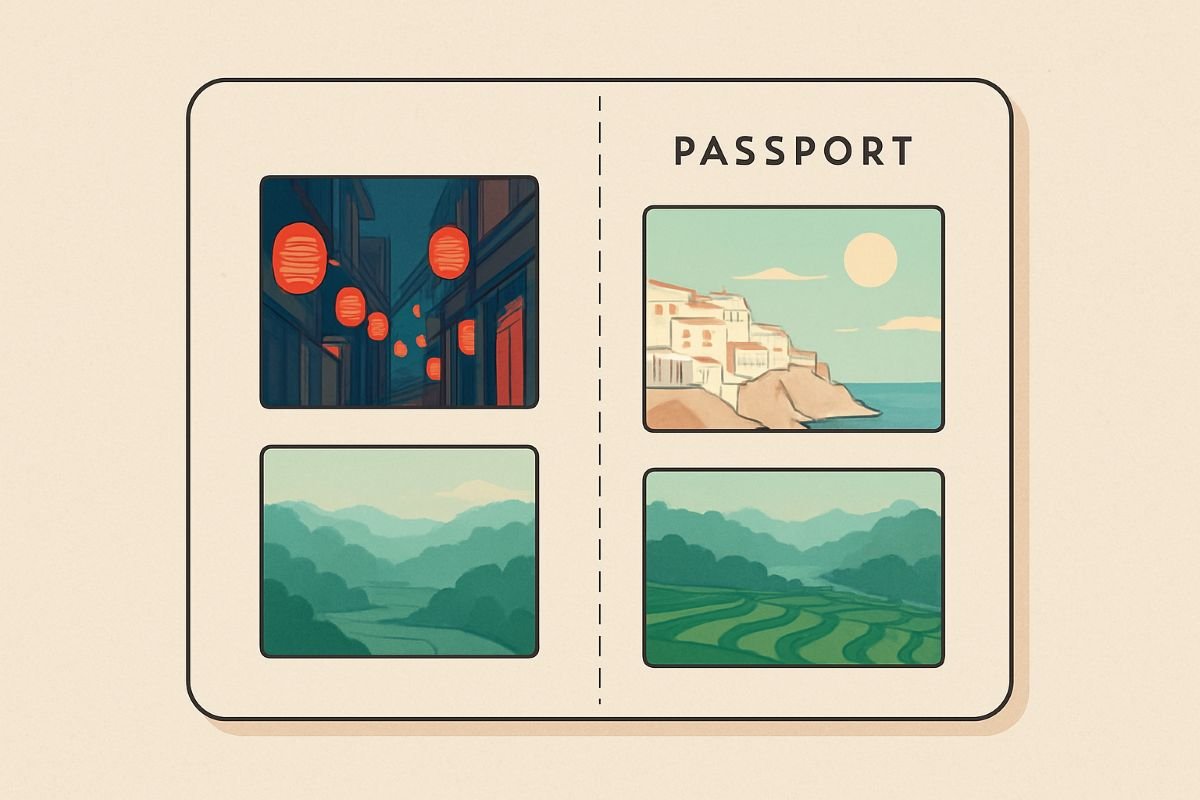 East Asia: Japan, South Korea and Taiwan
Neon streets and quiet shrines. Mountain rail lines and sea breezes. East Asia offers order, efficiency, and a deep bench of city, coast, and countryside options. Tokyo’s punctual trains, Seoul’s spirited neighborhoods, Taipei’s night markets, and Kyoto’s gardens entice those seeking calm logistics and rich culture. For risk-aware travelers, these routes feel steady, with airlines offering plenty of nonstops and reroute choices across the Pacific or via northern corridors.
Southeast Asia: Thailand, Vietnam ,Malaysia and Indonesia
Warm nights, fragrant kitchens, soft sand, and temple spires. Bangkok’s river glow leads to Chiang Mai’s hills; Hanoi’s old quarter opens onto Ha Long’s limestone bays. Kuala Lumpur’s skyline shares time with Penang’s heritage streets. Bali’s terraces run green under morning mist. The region’s hubs—Bangkok, Kuala Lumpur, Singapore—connect widely and allow itineraries that avoid more sensitive skies.
Southern Europe: Portugal, Spain, Italy and Greece
Atlantic cliffs at golden hour, tiled lanes, and seaside promenades. Travelers swap Levantine itineraries for Lisbon’s tramways, Barcelona’s markets, Rome’s piazzas, and the Cyclades’ whitewashed stairs. Spring shoulder seasons shine particularly bright, with direct transatlantic flights and plentiful intra-Europe connections that route far from tense corridors.
Other Stable Options: Australia, New Zealand, Canada and Mexico
Distance can be a comfort. Australia’s coastal drives, New Zealand’s alpine trails, Canada’s quiet lakes, and Mexico’s colonial towns and beaches attract those who value clear routes and strong tourism infrastructure. Vancouver to the Rockies. Auckland to Fiordland. Oaxaca’s plazas at dusk. Easy to picture, easier to book with straightforward flight paths.
Choosing Safer Routes and Airline Hubs
Small choices on a booking screen carry big weight in the air. A thoughtful connection or a different alliance can reshape the trip’s risk profile without erasing its spirit.
Avoiding Overflight of Unstable Regions
Study the map behind the route. Some itineraries cross areas where airspace restrictions have shifted in recent years—parts of Iraq, Iran, Syria, Yemen, or around the Black Sea. Many carriers already divert, but not all routings are alike. If two options reach the same destination, pick the one tracing a higher latitude, a longer overwater segment, or a well-used corridor known for stable operations.
A few extra minutes aloft are a small price.
Favoring Major Hubs with Multiple Reroute Options
Choose hubs with deep connectivity and proven contingency playbooks. London Heathrow, Frankfurt, Paris Charles de Gaulle, Amsterdam Schiphol, Singapore Changi, Tokyo Haneda, Seoul Incheon, Toronto Pearson, and Dallas/Fort Worth generally offer multiple daily frequencies on overlapping routes. If a path closes or a connection slips, alternatives exist the same day.
Alliances help too. Book on a single ticket within an alliance so protected connections, interline baggage, and reaccommodation come standard. Longer layovers provide buffer for unplanned checks or gate changes.
Travel Insurance Essentials in Uncertain Times
Insurance shifts from afterthought to anchor when headlines turn sharp. It will not rewrite policy at the check-in desk, but it can catch a fall and smooth a detour.
Exclusions Related to War and Military Conflict
Most travel policies exclude losses tied to war or military action. That means cancellations solely due to a declared conflict may fall outside standard coverage. Insurers draw bright lines here; a traveler should assume exclusions are firm unless a policy specifically states otherwise.
Dependence on Government Travel Advisories
Coverage often hinges on advisories from the U.S. Department of State or equivalent authorities abroad. A shift from Level 2 to Level 4 can change what’s payable, especially for trip interruption, cancellation, or evacuation. Review both your policy wording and the current advisory level for each country on your route, including transit points.
Key Protections CFAR Evacuation Delay and Rerouting
Cancel For Any Reason (CFAR) is the catch-all for unease. It typically refunds a significant portion of prepaid costs when you cancel outside standard covered reasons, provided you meet purchase and timing rules. Pair that with robust medical and security evacuation benefits—limits high enough to fund an air ambulance if needed.
Trip delay and interruption benefits matter too. These can cover last-minute hotel nights, meals, replacement flights, and rerouting when a connection disappears. Look for clear per-day and total limits.
Smart Insurance and Booking Strategies
Plans tighten when you place these pieces early and intentionally.
Buy Policies Immediately After Booking
Timing protects options. Many valuable features—CFAR, preexisting condition waivers—require purchase within a narrow window after your first trip payment. Wait too long and those doors close. Buy as soon as your deposit clears.
Select CFAR with High Evacuation Limits
CFAR works best alongside evacuation coverage that doesn’t blink at real numbers. Air ambulances and specialized transports are expensive. Look for six-figure limits and 24/7 assistance that can coordinate care, not just write checks. Confirm whether security evacuation is included or sold separately.
Pair Insurance with Flexible Airline and Hotel Terms
Coverage is stronger when suppliers are forgiving. Choose airfares that allow changes with minimal fees and hotels with penalty-free date shifts. A flexible ticket plus trip interruption coverage turns a canceled corridor into a change, a meal, and a bed—then a reroute the next morning.
Common Insurance Mistakes to Avoid
Purchasing Coverage Too Late
Once an event becomes foreseeable, many protections stop applying to new policies. Buy early and lock in the broadest benefits. Delay shrinks the safety net.
Assuming Conflict Is Automatically Covered
Standard policies rarely cover war-related cancellations. Read the exclusions section and search for precise terms. If a term confuses, ask the insurer in writing.
Overlooking Official Advisories
Advisories influence both your policy and on-the-ground services. Airlines may adjust schedules, and consular help may change with each level. Check advisories for your destination and any transit country before you finalize plans.
Choosing Price over Adequate Protection
The cheapest policy can look tidy until a long delay piles up receipts. Compare limits for evacuation, delay, and interruption against realistic costs at your destination. Value lives in the numbers, not the headline price.
Traveling Confidently amid Regional Turbulence
A steady trip today looks like this: safer destinations, thoughtful routing, and a backstop that pays when plans bend.
Focus on Safer Destinations and Adaptive Planning
Pick places away from current flashpoints. Favor countries with clear entry rules, reliable care, and predictable transport. Build an itinerary with optional days and swappable stops. If a ferry cancels or a rail corridor slows, shift a beach day forward or trade a mountain town for a city stay.
Small pivots keep the trip whole.
Use Flexible Bookings and Proper Insurance for Resilience
Choose tickets with change privileges and hotels that allow date moves. Add insurance that addresses your real worries: CFAR for uncertainty, evacuation for rare emergencies, and delay coverage for the nuisances in between. Keep copies of policies, emergency numbers, and reservation details offline for easy access.
Then travel the way seasoned planners do—eyes open, plans written in pencil, spirit intact. The world remains wide. Routes shift, and travelers shift with them. A calm choice here, a careful clause there, and the door to your next departure stays comfortably open.