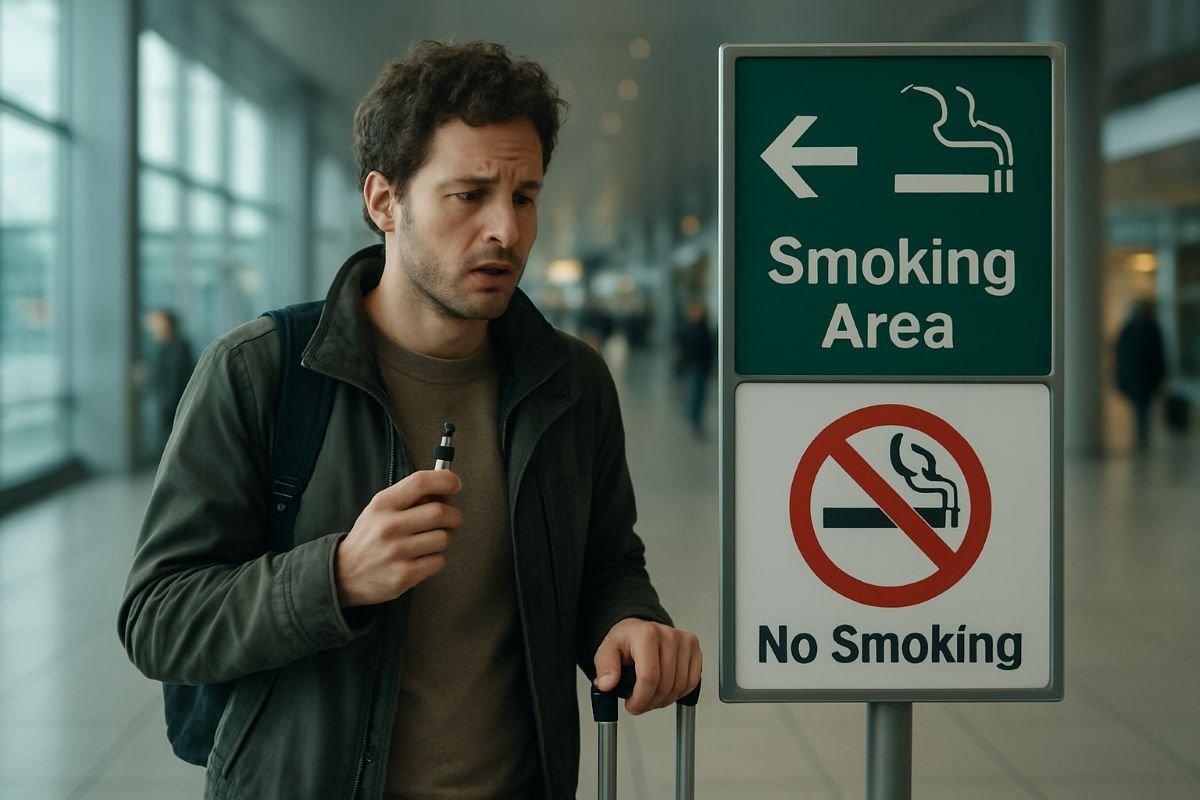
Why Smoking Rules Can Make or Break Your Trip
A cigarette on a balcony. A vape at the curb. Choices like these can decide whether your trip feels smooth or fraught. Local rules don’t just set boundaries; they shape where you linger, how you plan your days, and the cost of a simple habit in a new place.
Picture landing after a long-haul flight and heading straight for the nearest smoking area, only to find that the terminal has none past security. Or arriving at a hotel that charges a hefty fee if it detects smoke, even on a balcony. These aren’t rare surprises. They’re routine parts of travel for smokers and vapers.
Small details matter. Fines add up. So does stress.
Regulations change from city to city, and the tone of enforcement changes too. In one destination, a warning. In another, an instant ticket and a pointed finger toward the nearest sign. Planning around these contrasts can keep your trip calm, respectful, and far less expensive.
What Counts As Smoking in Different Places
Cigarettes, Cigars and Roll Your Own
Traditional tobacco products remain the baseline for most rules. If you light it and it burns—cigarettes, cigars, roll-your-own—it nearly always falls under standard smoking bans. That can include indoor bans in public places, distance rules from doorways, and even street restrictions in busy districts.
Cigar lounges exist in some cities under special permits. Other cities have phased them out. Rolling your own doesn’t change the classification, even if the aroma seems subtler to you. Authorities focus on combustion, ash, and secondhand smoke, not the format.
Vaping and Heated Tobacco
Many travelers assume vaping sits in a gray area. In practice, it’s often treated like smoking or restricted even more. Some countries regulate e-cigarettes as tobacco products; others ban their sale or possession outright. Confiscation and fines are possible in places with strict policies.
Heated tobacco devices blur the lines. They don’t burn leaf, but they do release aerosol from tobacco sticks. Many jurisdictions group them with e-cigarettes, while some treat them like cigarettes. Expect signage that lumps all “electronic smoking devices” together. Assume restrictions apply unless expressly stated.
Hookah and Shisha
Hookah lounges still appear in many cities, yet rules are varied. Some locations allow hookah in licensed venues with special ventilation. Others restrict it to outdoor terraces. Charcoal use can trigger separate fire safety rules, especially in older buildings and high-rise spaces.
Bringing your own hookah gear into parks or beaches may be prohibited due to coal and ember hazards. Even where tobacco smoking is permitted, charcoal-driven devices might be excluded.
Cannabis and CBD
Cannabis laws shift dramatically across borders. Smoking cannabis is illegal in many countries, even if it’s legal or decriminalized back home. Transporting cannabis across borders is usually illegal, regardless of quantity or medical status.
CBD adds complexity. Some countries allow CBD with strict THC thresholds; others restrict it entirely. Labeling that looks harmless in one region may trigger seizure in another. Oils, gummies, and vape cartridges labeled “hemp” can still raise questions at customs. Move cautiously and verify rules at your destination and any transit stops.
Where Smoking Is Allowed and Where It Is Not
Indoors in Bars, Restaurants and Hotels
Indoor smoking is widely banned in restaurants and bars across much of Europe, North America, and parts of Asia and Oceania. Even where a venue has a patio, the patio may have distance rules from doorways or partitions to protect staff and guests.
Hotels are increasingly smoke-free, including balconies and terraces. Cleaning fees can be substantial. Some properties designate smoking floors or outdoor courtyards with ash receptacles. Ask at check-in. The most expensive puff is the one you take under a smoke alarm at 2 a.m.
Outdoor Spaces: Beaches, Parks and Sidewalks
Outdoor bans are common in family areas, historic districts, and waterfront promenades. Beaches in many coastal towns designate smoking bays near entrances or ban smoking altogether to protect wildlife and reduce litter. Park rules often vary by city and season.
Sidewalk rules can be counterintuitive. A bustling street might allow smoking, while a nearby shopping arcade forbids it. In some cities, sidewalk smoking is banned in whole zones, with marked smoking corners or street ashtrays. Watch for ground stencils and pole-mounted signs.
Transport: Planes, Trains, Buses and Rideshares
Airplanes prohibit smoking and vaping everywhere—cabins, toilets, galleys. Tampering with smoke detectors brings severe penalties. Airports may have designated rooms landside or airside, but many have removed them entirely.
On trains, policies vary. Long-distance routes sometimes have no smoking anywhere, including between cars and on platforms. Urban buses forbid smoking and vaping onboard and usually within station shelters. Rideshare and taxi rules are strict; lighting up can lead to cleaning fees, ratings hits, and driver complaints.
Age Limits and ID Checks Travelers Should Expect
Legal purchase ages differ. Common thresholds include 18, 19, 20, or 21. In some places, the purchase age and the possession age aren’t the same. Shops often scan IDs, and some bars require ID even for outdoor smoking areas.
Tourists encounter stricter checks than locals. Carry a passport or an accepted digital or plastic ID. Paper copies can fail. If you look under 30, expect scrutiny.
Buying, Carrying and Declaring Tobacco
Duty Free Allowances by Region
Most borders set quantity limits for tobacco products. Typical allowances include something like 200 cigarettes, 50 cigars, or 250 grams of loose tobacco, with adjustments by region and country. Over the limit, you’ll declare and pay duty—or risk seizure and fines.
Connecting flights complicate things. Duty-free bags sealed at one airport may be inspected again at another, especially on domestic legs after international arrivals. Keep receipts visible. Keep quantities clear.
Taxes Plain Packaging and Display Rules
Sticker shock is common. Some countries impose high excise taxes, making cigarettes and rolling tobacco far pricier than at home. Retailers may keep products behind plain shutters or in closed cabinets, so you’ll order by name rather than browsing shelves.
Flavor bans and menthol restrictions exist in several markets. Pack designs can be standardized with large health warnings, and brand colors may be absent. If you’re seeking a specific variety, you might not find it in every store.
Liquid Limits and Batteries for Vapes
Airport security treats e-liquids like other liquids. Bottles should fit the standard hand luggage liquid allowance, typically in small containers within a resealable bag. Larger bottles belong in checked baggage, tightly sealed and bagged to prevent leaks.
Vape devices and spare lithium-ion batteries must go in carry-on. Protect exposed terminals with caps or dedicated cases. Power off devices and remove pods to avoid accidental firing. Torch-style lighters face strict bans, while one small disposable lighter may be permitted in carry-on in some regions. Check lighter and match policies in advance.
Finding Designated Smoking Areas Without Hassle
Airports and Stations
Wayfinding starts with icons. Look for the cigarette symbol on overhead boards and terminal maps. Some airports have outdoor terraces past security; others keep smoking areas landside only. If the area is airside, it may be tucked behind a food court or at the far end of a concourse.
Major train stations may assign small outdoor pens near specific exits. Weather protection is often minimal. Carry a compact umbrella or jacket if you expect long transfers.
Hotels, Rentals and Balconies
Call ahead or message the property. A building may ban smoking on balconies because smoke drifts into neighboring rooms. If a hotel permits it only in a garden, the front desk can point you there. Rental hosts sometimes list strict rules but will indicate a spot near a gate or driveway.
Portable ashtrays keep balconies and courtyards clean. They also help you avoid leaving any trace that could trigger a fee.
Attractions, Stadiums and Festivals
Stadiums usually post smoking maps on event pages. Some have re-entry bans, so you’ll need an internal smoking zone. Museums and historic sites tend to push smoking to perimeter streets, often beyond security lines.
Outdoor festivals may change rules with wind conditions or local fire risk. Staff make regular announcements. Follow the crowd toward signed zones with tall flag markers or barriered corners.
Fines Enforcement and What Happens If You Slip Up
On the Spot Penalties and Local Policing Styles
In some destinations, officers or municipal agents issue immediate fines. Card readers and printed receipts appear on the spot. Elsewhere, an official warning comes first, with a fine only if you repeat the behavior.
The tone can vary. Quiet and firm in one city, very visible in another. Keep calm, listen, and move to the designated area without argument.
No Smoking Zones You Might Miss
Common traps include building entrances, bus shelters, children’s play areas, and narrow pedestrian streets. Hospital grounds, school perimeters, and government buildings often have wide buffer zones. Beaches marked with turtle or seabird icons may forbid smoking to protect nesting sites.
Look down as well as up. Sidewalk stencils often carry messages in multiple languages.
What to Do If You Are Cited
Ask for a written notice or receipt that shows date, amount, and authority. Provide ID if required. Paying promptly can reduce penalties in some places; delays can increase them.
If you believe a mistake was made, follow the appeal instructions on the notice rather than arguing on the street. Photograph nearby signs for your records. Stay polite. It helps.
Respecting Local Norms and Staying Considerate
Reading Signs and Unspoken Cues
Signs change by country: “No fumar,” “Fumer interdit,” “Rauchen verboten.” Even without words, a crossed-out cigarette is clear. Watch how locals behave in courtyards and alleys. If no one else lights up, hold back.
In family-heavy areas or temple grounds, avoid smoking even if not explicitly banned. Courtesy travels well.
Odor Control and Ash Disposal
Smoke lingers on clothes and hair. A small fabric spray or travel-size deodorizer helps, especially in rideshares and tight elevators. Hand wipes clear the faint scent of tobacco from fingertips.
A pocket ashtray prevents stray ash and filters in planters or sand. Never bury butts in beach sand; they surface later. Use bins with metal tops or sand bowls where provided.
Alternatives When Smoking Is Hard to Find
Nicotine gum, lozenges, or pouches can bridge long flights, museum days, or rainy waits outside a station. Some travelers switch to lower-nicotine products before departure to soften cravings.
Hydration and mints help. So does a short walk between urges.
How to Prepare Before You Go
Research Tools and Official Sources
Check your destination’s government health and customs sites for smoking laws, sales rules, and duty-free limits. Airport and airline pages list terminal smoking areas and battery policies. City tourism boards sometimes publish beach and park rules, especially for summer months.
Embassy advisories can highlight restrictions for visitors. Transit agencies post platform rules and shelter bans.
Talking to Airlines, Hotels and Hosts
Message your airline about vape battery carriage and liquid allowances if you’re unsure. Ask hotels about designated areas and balcony policies. For rentals, clarify outdoor spots and ash disposal methods. A short note avoids misunderstandings and surprise fees.
If language is a barrier, request a simple written confirmation. Screenshots help at check-in.
Packing Checklist for Smokers
– Travel-size ashtray with tight seal
– Zip-top bags for butts until you find a bin
– Small odor neutralizer or fabric spray
– Nicotine gum, lozenges, or pouches for restricted zones
– E-liquid in small bottles for carry-on, larger ones sealed in checked baggage
– Battery cases and spare coil heads; device powered off
– One compliant lighter or safety matches, if permitted
– Copies or screenshots of airline, airport, and customs rules
– A compact umbrella or light jacket for outdoor smoking areas
– A universal adapter and proper USB cables for chargers
A little prep goes a long way. So does patience at a marked smoking corner on a rainy evening.
Travel feels lighter when the rules are familiar. Check before lighting up. Respect the air around you, and you’ll move easily from terminal to taxi to terrace, without surprises or awkward apologies.
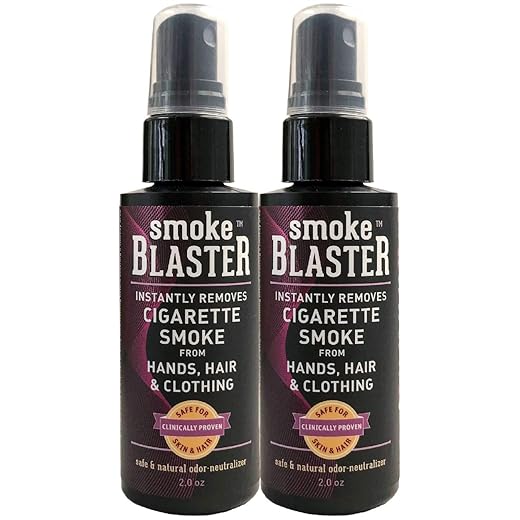
Natural Odor Eliminator Spray - 2 Pack
How to Use Natural Odor Eliminator Spray
Follow these simple steps to effectively use your Natural Odor Eliminator Spray:
Step 1: Prepare the Area
- Ensure you are in a well-ventilated area for optimal results.
- Identify the areas where smoke odors are present (hands, hair, clothing).
Step 2: Shake the Bottle
- Before use, shake the bottle gently to mix the natural ingredients.
Step 3: Spray the Affected Areas
- Hold the bottle about 6-8 inches away from the targeted area.
- Spray a light mist over your hands, hair, or clothing.
- For best results, focus on spots that are heavily affected by the smoke odor.
Step 4: Allow to Dry
- Let the spray air dry on the surface for a few moments.
- Avoid rubbing the area after spraying to allow for maximum odor neutralization.
Step 5: Enjoy Freshness
- Take a moment to enjoy the refreshing scent and the absence of smoke odors.
- Feel confident and refreshed for your next social engagement!
Additional Tips
- Keep the spray handy in your bag or pocket for on-the-go freshness.
- Use the spray as needed, especially after being in smoky environments.
- For best results, use regularly as part of your grooming routine.