Yunnan Wakes in the Scent of Tea
A kettle hums at dawn. Hills breathe out the cool of night, and the first leaf remembers rain. In the far southwest of China, a province stirs with a fragrance older than its roads, older than even the caravans that once threaded the mountains. Yunnan wakes, and the world hears.
News travels quickly these days. A list of places to go finds its way into waiting pockets, and among those names is Yunnan, chosen by a newspaper that so often watches the globe from afar. Yet the reason for its arrival here is anything but new.
The old tea routes are breathing again.
Not as they once were—trails of mud and granite, shoe-sliced and hoof-cut, climbing toward cold plateaus. Instead, their breath moves through kitchens and porches, through guest rooms that hold the lamplight of evening, through conversations of travelers arriving by car, cupping warm cups with stiff hands.
A scent becomes a welcome.
Yunnan’s morning broadens its sky.
Where Tea First Learned to Speak
Here, people say, the leaf first found its language. The wild groves whispered, and a hand listened. Trees with thick, elephant-foot roots and centuries of weather in their growth rings stood as elders. From them came a leaf that would be plucked, dried, softened by time, and offered to snowbound monasteries and windswept passes.
Pu’er, dark and alive, keeps speaking. It ferments gently, a slow alchemy that does not hurry the world. The cup it fills is not merely warm; it hums with earth and woodsmoke and the sound of rain on stone. In its patience, it carries the memory of footpaths and yak bells, of markets where the first steam of the day rose like prayer.
Tea learned to speak in Yunnan, and it remembers its grammar: leaf, water, heat, and the silence between sips.
Sometimes a single sip is a map.
The Road of Tea and Hoofbeats
Before the middle years of the twentieth century, for a thousand seasons and more, a web of paths carried tea north and west. People called it many names. The one that stays on the tongue translates simply: the road of tea and horses. It was not one road, but many. They knotted and unknot, diverging around storms, converging at fords, curving through valleys lush with orchids and birdsong.
These paths ran straight through Yunnan’s varied green, up into winds that spoke Tibetan, into towns where altitude thinned the air and thickened the stew. Tea went forward like a pilgrim, and, in return, it brought back stories that seeped into the clay cups of the south.
The routes endure in the memory of places that kept watch over them. Stone steps, foot-worn. Old thresholds shining with hand oil. A rhythm of footsteps under the moon.
Caravans over Cloud Passes into Tibet
Close your eyes and listen. Hooves on rock. Cloth packets of tea, tight as fists, strapped to mules with lacquered rope. The bells are small but sure, a silver tapping against the hush of high passes.
The air thins. Clouds graze the shoulders of peaks, and a caravan moves into their white wool, leaving behind a trail of breath, a ribbon of sound. On the other side lies the vast tableland where butter melts into tea and prayer flags talk to the wind.
That journey did not end so much as change its manner of moving. The passes remain, and so do the bells, though you hear them now in memory more often than with the ear. Still, a road is a kind of sentence: it carries meaning forward, even if the voice changes.
Villages That Remember the Caravan Bells
The routes may have slackened, but the villages did not vanish. They settled into themselves and kept the habits of welcome. A table under a beam-black ceiling. A bench warmed by the afternoon sun. Porches where dogs sleep, untroubled by passing clouds.
Former waystations remain. They carry the weight of time lightly but clearly—the way a well-handled cup shines. You arrive, and someone sets water on to boil; it’s a gesture older than the chimneys.
Each village holds its own pulse, its dialect of stone and soil, its weather of laughter and quiet. Culture here is not a museum label. It is a grandmother arranging leaves on a bamboo tray. It is a child running, flour on cheeks. It is a carver leaning over cedar with a small, sharp knife.
Crafts Kitchens and the Art of Fermentation
Fermentation is a form of faith. You leave something living to time and watch it change. Tea knows this. So do earthen crocks lined up under eaves, where cabbage and peppers settle into their deeper selves, and soy darkens to a shine.
In kitchens warmed by hearth coals, the air is rich with steam. Here, hands can read history: rolling noodles, patting dumplings, pinching salt between fingers. Spices are pressed into the smiling palm of a visitor. The knife’s rhythm is as steady as breath.
Craft grows from these rooms outward: woven cloth the color of dusk, silverwork that catches firelight, bowls that remember clay’s riverbeds. The road lingers most clearly in what people make to keep one another fed, sheltered, seen.
A Filmmaker Builds a Hearth Called Home
At the turn of a century, a man who had been gathering stories with a camera turned toward an older lens: his family home. He was Tibetan, a documentarian of faces and seasons, and he looked at a house with the eyes of someone who understands how a story can hold a room together.
In the year 2000, he opened his ancestral doors anew. The home became a place to stay, but also to sit, to speak, to listen to the wind make its soft grammar along the rafters. That gesture—warm, local, attentive—glowed like a lamp after dark.
From that first hearth, others followed.
Songtsam: a Necklace of Mountain Light
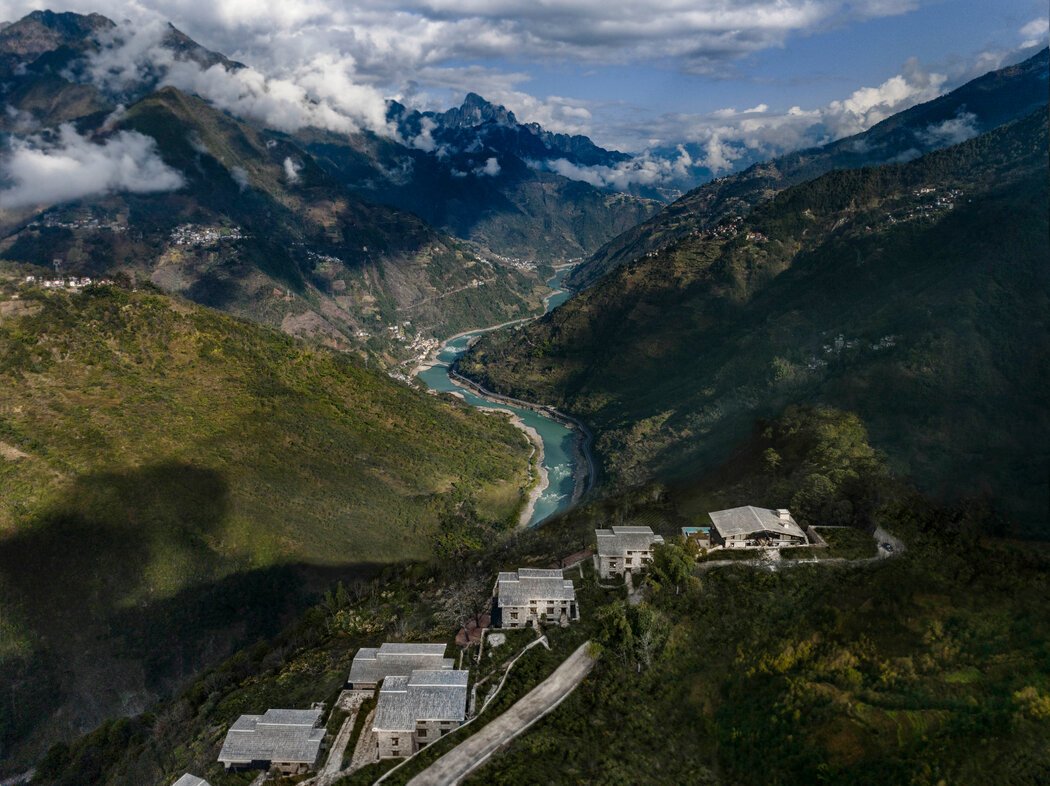
The hospitality that grew from that house took a name: Songtsam. One by one, lodges appeared, ten in all across this high country. They did not appear as strangers. They arrived like neighbors, built low, set gently, their windows asking for morning.
Together they trace a route that travelers can follow by wheel. The stations of this way are villages rather than terminals. Between them are reads of sky, lanes of shadow, rain puddles like brief mirrors.
In these places, the welcome is a hand to your cup, a path shown by lantern, a phrase learned in the language of the next valley. The old road has a new roof, and under it, stories continue.
Journeys by Car Pilgrims of the Heart
The new route does not snub the old. Tires hum where hooves once struck spark, and the mountains remain the same age as truth. You steer along a ribbon of asphalt that respects the curves of river and slope. Every turn reveals a village that knows how to lower its voice around evening.
Drive, rest, drink tea. Then drive again.
To pause is to learn. In one stop you might watch lacquer set to gleam under careful hands. In the next, you might be led to a smokehouse where pork moves slowly toward its darker self. A roadside shrine nods politely to your passing. Chickens slip through fences like ideas. In the rearview, a range stands guard; ahead, another range offers shade.
Pilgrimage does not always require feet. It asks for attention.
Kunming Opens Like Spring
Down from the passes, where the air warms and the market voices lift, lies Kunming, the provincial capital. Even its name sounds like a door opening. Here, a new house of welcome readies its rooms. Fifty-three keys. Sheets turned back like the corner of a page you cannot wait to read again.
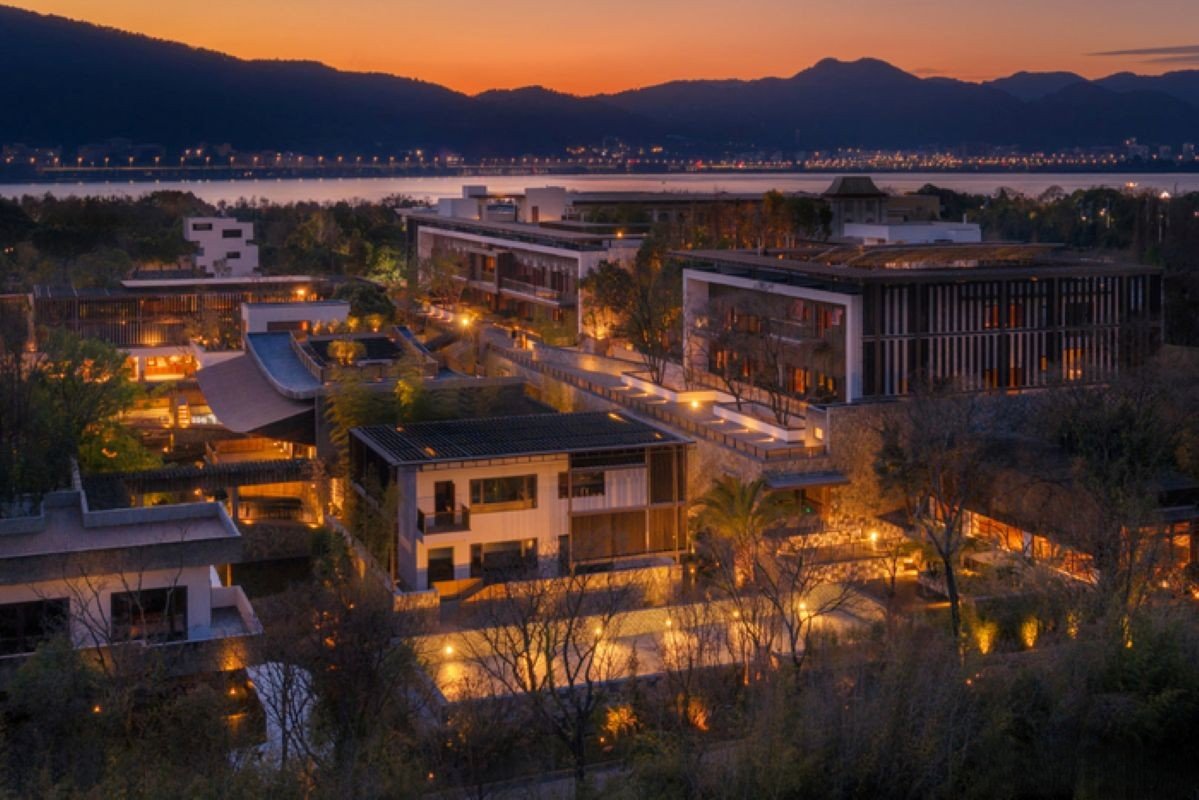
Spring is the chosen season for this opening. It suits the city’s long-standing rumor of mildness, that easy weather which sits down beside you and says, Stay a while.
A Pritzker Dream in Stone and Timber
The hands behind the design belong to Wang Shu, laureate of the Pritzker Architecture Prize. Stone remembers weight; timber remembers wind; both respond to a mind attentive to place. The result is not a shout but a measured breath—rooms that borrow morning light and return it in the evening with a warmer hue.
Windows frame the ordinary with care: a sky rinsed by rain, a lane where bicycles lean like commas, a courtyard where the first camellias fall on wet tiles. Architecture here is not spectacle. It is shelter shaped by thought, proof that quiet craft can widen the heart.
Fifty-three rooms, and each a pause.
Tea As Compass Culture As Map
A compass does not tell a story; it insists on north. Tea, though, asks you to sit and listen before you move. In Yunnan, both compass and cup find good use. If you are unsure which village awaits you next, pour water, lift leaf, wait. The answer steepens. Paths align.
Culture unfolds as a map you do not fold away. It is the pattern of markets through the week; it is whose song you hear on washing day; it is the boldness of a red thread in a sleeve. You learn to read by tasting, by asking, by watching an elder’s hands. The map does not end at the border of a province. It keeps spreading like steam on cold air.
Let tea point. Let culture explain.
When Roads Become Stories Again
Some roads forget their task and settle into dust. Others refuse to be reduced to a line on a page. The tea routes running through Yunnan have chosen a second life as something more than transit. They are now rooms with warm lamps. They are kitchens with crock lids slightly ajar. They are paths from one welcome to another.
Modern hospitality has not replaced the old exchange of leaf and hoofbeat; it has given it another voice. A guest arrives, hears a bell. Not a caravan’s bell, no, but the polite bell of a door as it opens. Even so, the echo is there, riding the air.
Sit. Sip. Ask about the road that once ran past this threshold. Someone will point to a slope, to a line of cypresses, to a cut in the ridge. Someone will bring out a wrapped brick of tea, dark with years, and break it gently with a small pick. The pieces will fall like little dusk-colored stones into your cup.
And you will taste the miles.
Because the road speaks now in cups, in rooms, in stories retold to guests who come carrying their own weather. Yunnan receives them with patience. The province that taught tea its first words continues to teach, softly, by example: how to welcome, how to wait, and how to send a traveler on with a steadier heart, warmed by the oldest scent in these hills.
The old bells still ring.
Listen. Then go. Then return, if you can.
There will be hot water waiting.