Travel light. Breathe safe — which pocket-size CO alarm belongs in your carry-on?
You could be sleeping next to an invisible danger. Picture a cozy cabin, an RV after a long drive, or a bargain motel — and carbon monoxide sneaking in without smell or color. Short nights can turn risky fast.
Top Picks
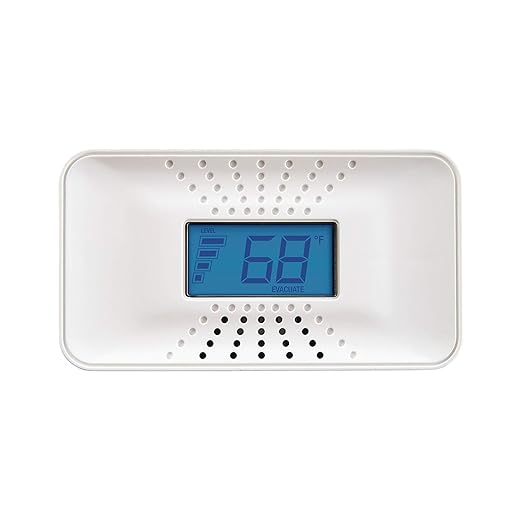

First Alert 10-Year Battery CO Alarm
A mature design that gives up to a decade of continuous protection with a sealed lithium battery and electrochemical sensing. It’s ideal for people who want a set‑and‑forget detector with a readable backlit display of temperature and CO levels.
Overview and intended use
This First Alert model pairs a UL‑tested electrochemical CO sensor with a built‑in 10‑year lithium battery, providing continuous monitoring without battery swaps for the alarm’s rated life. The backlit digital display shows ambient temperature as well as current and peak CO concentrations, making it useful for both home and travel use where a dependable long‑life detector is preferred.
Notable features and benefits
The sealed battery design is particularly attractive for travelers and landlords because it reduces maintenance and the typical failure modes that come with removable batteries. The digital peak indicator is useful for diagnosing intermittent leaks or incomplete combustion events you might otherwise miss.
Limitations and practical considerations
This is a replace‑at‑end‑of‑life product rather than rechargeable hardware; the entire unit is designed to be replaced after roughly ten years. For users who prefer replaceable batteries or continuous logging and remote alerting, consider a rechargeable or smart detector instead. Still, for straightforward, low‑maintenance safety, this model is one of the best choices for long‑term protection.
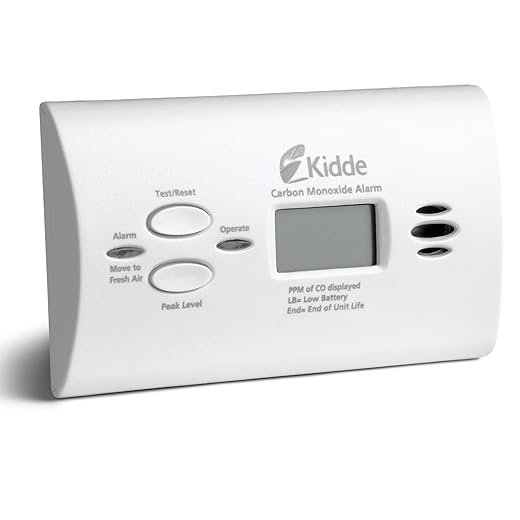
Kidde AA Battery Portable CO Alarm
A straightforward, UL‑listed CO alarm with a proven electrochemical sensor and clear visual status LEDs. It combines dependable detection, an audible 85 dB alarm, and peak‑level memory in a compact portable package ideal for travel or temporary monitoring.
What it does and who it’s for
The Kidde AA Battery Portable CO Alarm is a no‑frills, proven carbon monoxide detector designed for dependable protection in homes, short‑term rentals, RVs, and travel. Its electrochemical sensor meets UL standards, and the unit emits an 85 dB alarm with a flashing red LED when dangerous CO levels are detected. Because it runs on AA batteries it’s ideal for locations without convenient mains power or for taking along on trips.
Key features and practical benefits
This combination of features makes the unit easy to verify and maintain: the test/hush button lets you confirm operation quickly and the peak memory gives a record you can check after an event. The compact size and table/wall mounting options make placement flexible — hang it near sleeping areas or set it on a nightstand when traveling.
Limitations and practical tips
While highly reliable for basic CO protection, this model is focused on alarm functionality rather than continuous ppm logging or advanced wireless features. For people who want a continuous numerical display of ppm or remote alerts, consider a rechargeable digital monitor instead. For travel use, keep spare AA batteries in your kit and test the unit before each trip to ensure the unit and battery contacts are clean and functioning.
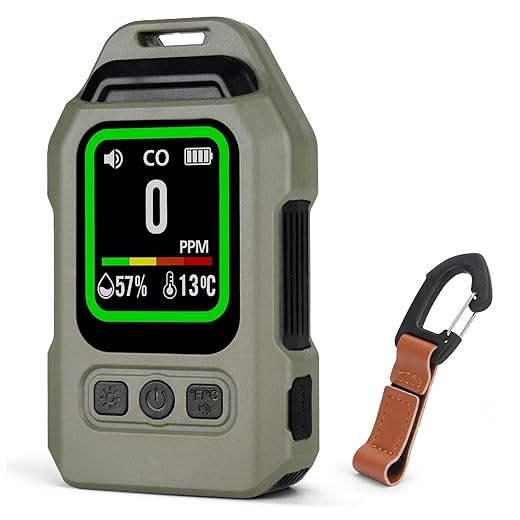
Portable 4‑in‑1 Rechargeable CO Monitor
A versatile rechargeable unit that combines CO detection with temperature, humidity, and a built‑in flashlight — great for camping, RVs, and roadside use. Its magnetic back and long standby time make it convenient to mount and carry on trips.
What makes it stand out
This rechargeable 4‑in‑1 monitor is designed for on‑the‑go safety — it reports real‑time CO readings in ppm while also giving temperature and humidity data, plus a useful flashlight for low‑light situations. The device’s magnetic back and included lanyard let you mount it on a metal surface or keep it handy while camping or working around combustion engines.
Key features and everyday uses
Users report the unit reacts quickly to rising CO levels and provides a reassuring real‑time numeric readout that basic alarms lack. The flashlight and compact form factor add practical value when you’re staying in hotels, RVs, or tents where portable lighting and instant air‑quality feedback help you stay safe.
Limitations and tips
While accurate enough for travel and supplemental monitoring, this device should not replace UL‑listed household alarms for fixed installations. Battery life varies with display and flashlight usage — switch to power‑saving modes or turn off the lamp when you need extended runtime. For best results when camping, mount the unit near potential CO sources (heater exhaust, generator area) but out of direct wind or open windows where readings can be diluted.
PRIMBARBER 3‑in‑1 Travel CO Detector
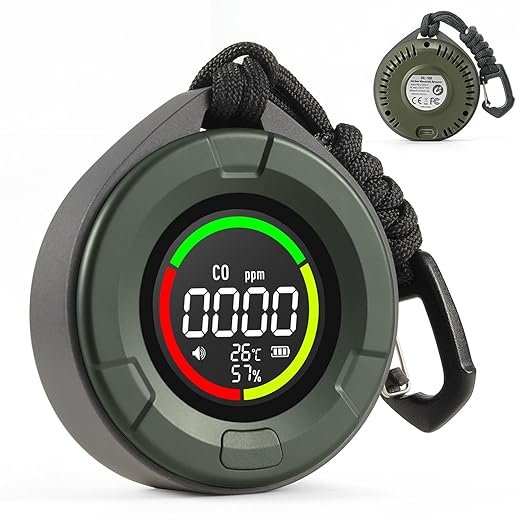
This compact rechargeable detector gives color‑coded visual cues and audible alarms to make risk easy to interpret at a glance. It’s well suited for RVs, tents, and short‑term stays where you need rapid situational awareness of CO, temperature, and humidity.
Focused on clarity and portability
The PRIMBARBER 3‑in‑1 detector emphasizes clear visual feedback: green/yellow/red color cues plus audible alerts make it easy to interpret safety status without parsing numbers. It measures CO (0–1000 ppm), temperature, and humidity, and is small enough to stow in luggage or hang inside a tent.
What you get and how it helps
This device is particularly useful when you need a quick visual check — for example, scanning hotel rooms before sleeping or mounting it near a diesel heater in an RV. The fast refresh rate and visual color banding are helpful for nontechnical users who prefer an easy yes/no indication.
Real‑world limitations and advice
A few testers note that instantaneous detection in wide open or well‑ventilated areas can be slower to register than in closed environments — which is typical for small portable sensors. For reliable monitoring, place the unit where air from your heater, generator, or stove accumulates rather than in drafty areas. If you need data logging, remote alerts, or professional‑grade accuracy, pair this with a laboratory‑grade meter or a fixed home detector.
GasDoc DS‑100 Portable CO Monitor
A compact 3‑in‑1 monitor with clear visual bars and an audible alarm that triggers at low CO levels (50 ppm). It offers long runtime and a sturdy build, making it a solid companion for camping, ice‑fishing huts, cars, and hotels.
Design and suitability
The DS‑100 is a compact, travel‑oriented CO monitor with both audible and visual alarms. It displays CO levels alongside temperature and humidity and is engineered to alert users from around 50 ppm, providing early warning before concentrations reach more hazardous levels. Its small size and included accessories make it easy to stow in luggage or clip to pack straps while on the move.
Feature set and field performance
Many users praise the DS‑100 for its build feel, readable display, and long battery life. It’s particularly useful around portable heaters, generators, and vehicle exhaust when camping or parked in enclosed spaces. The dual audio‑visual warning system helps ensure alerts are noticed even in noisy environments.
Caveats and user advice
Quality control has been uneven for some buyers; there are reports of defective units or calibration issues out of the box, but responsive manufacturers have replaced units in several cases. If you purchase one, test it in a controlled, safe setting (follow the manual test instructions) and consider comparing it against a trusted reference meter if you require high confidence. For routine travel protection it provides a strong combination of runtime, alarms, and portability.
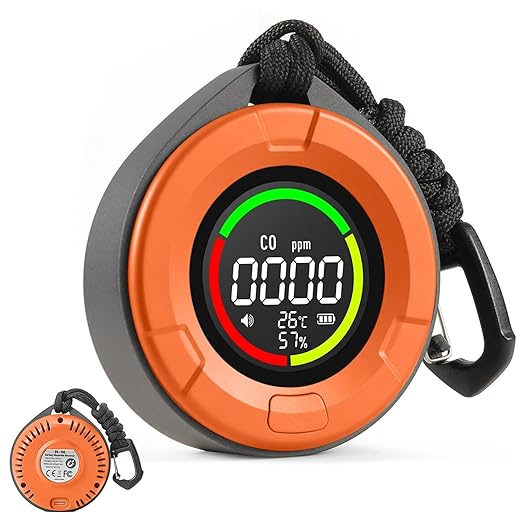
Mini 3‑in‑1 Travel CO Detector (Orange)
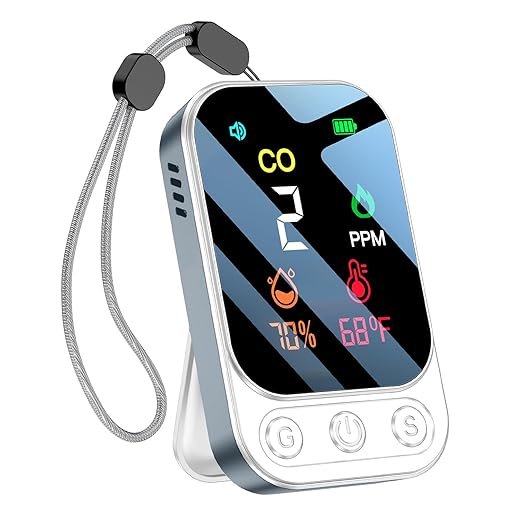
A pocketable 3‑in‑1 monitor that gives CO, temperature, and humidity readings with an 85 dB alarm and multiple mounting options. It’s a good economical choice for travelers who want extra peace of mind without bulky gear.
Small form factor, travel convenience
This mini 3‑in‑1 detector is designed to slip into a bag or pocket and give quick, readable CO/temperature/humidity data. At roughly the size of a lighter, it includes a kickstand, lanyard, and mounting screw hole, making it useful in hotels, RVs, cars, and tents where you need a compact safety monitor.
Features that matter on the road
For many travelers the device’s combo of compactness and multi‑sensor reporting is a winning tradeoff: it gives context about air quality (CO plus humidity/temperature), and the loud alarm is sufficient to wake sleeping occupants in a tent or room. The kickstand is a helpful touch for placing it on a nightstand or RV shelf.
Caveats and recommended use
A subset of buyers report units losing sensitivity or failing after weeks of use; this variability suggests quality control can be inconsistent across batches. Before relying on it entirely, test the unit at home and keep spare charging options. If you need mission‑critical, calibrated monitoring, choose a higher‑end dedicated CO meter; for general travel peace of mind, this offers a strong value.
Compact 3‑in‑1 CO Travel Monitor (Gray)
A low‑cost 3‑in‑1 detector that’s compact and easy to pocket for road trips and camping. It offers the basics — CO, temperature, humidity — and is a reasonable backup or secondary monitor for short‑term stays.
What to expect from a budget 3‑in‑1 unit
This compact gray 3‑in‑1 monitor focuses on affordability and portability. It provides basic ppm readouts for carbon monoxide and adds temperature and humidity so you can assess both safety and comfort in hotel rooms, RVs, tents, and vehicles. The small footprint and included accessories (lanyard, kickstand) make it convenient to deploy quickly.
Practical features for travelers
For travelers who want redundancy, carrying one of these in addition to a primary detector is a low‑cost way to add layers of security. The screen provides instant context — seeing humidity alongside temperature helps you judge ventilation quality when using portable heaters.
Durability and usage tips
Quality control appears variable across units: some users report limited life or calibration drift. Test the device before you rely on it on an extended trip, and rotate it with a trusted backup. Avoid exposing the unit to direct weather or heavy shock, and store a charging cable in your kit so you can top up the battery between uses.